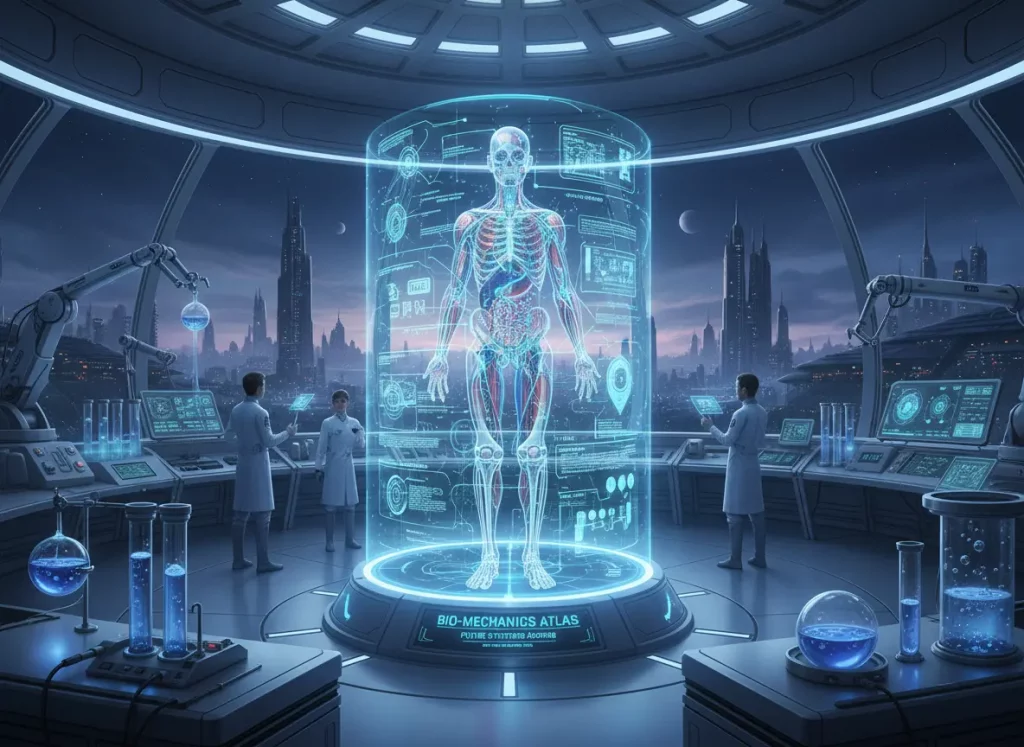
1. PURPOSE OF THE MECHANICS ATLAS
To catalogue every discovered human mechanic in a clean, neutral, scientific–practical format so anyone can:
Understand how humans work
Predict behaviour under load
See where dysregulation arises
Avoid myths, narratives, and distortion
Build Earth-2.0 systems grounded in clarity
Use the mechanics to regulate themselves
Apply them to families, organisations, or society
This is the first global mechanics library for the human nervous system + behaviour + perception.
2. THE ATLAS STRUCTURE
The Mechanics Atlas is organised into 4 Domains:
DOMAIN A — INTERNAL MECHANICS
How the body, nervous system, and perception behave.
Mechanics here include:
Load
Residue
Snap-Labelling
Time-Emotion Offset
Possibility Emergence
Uncertainty Collapse
Freeze / Runaway Mechanics
Regulated vs Dysregulated Modes
Substrate (Internal-of-Internal)
Narrative Seeding
DOMAIN B — SOCIAL MECHANICS
How humans interact when internal mechanics combine.
Mechanics include:
Label Weight
Role-Identity Distortion
Myth Formation
Authority Residue
Figurehead Dynamics
Dysregulation Propagation
Contrast Load (Hope → Crash)
Unconscious Sorting
Loop Formation
Siphon Mechanics
DOMAIN C — STRUCTURAL MECHANICS
How systems behave under human load.
Mechanics include:
Institutional Slowness
Inversion Emergence
Load-Freezing in Institutions
Role-to-Structure Misalignment
Label–Certificate Weight
Shadow Emergence Under Load
Freeze Points in Hierarchies
Distributed Anxiety in Objects (cars, institutions, software)
Reset Without Awareness Failure
History Repetition Mechanics
DOMAIN D — EARTH-2.0 MECHANICS
Mechanics only visible in a regulated, clear system.
Clarity Field
Two-Meaning Awareness
Transparency Stability
Behavioural Neutrality
Possibility Expansion
Load-Free Governance
Uncertainty Architecture
Human Flow Protocols
Emergent Architect Layer
Systemic Coherence
3. ATLAS ENTRY FORMAT
Every mechanic gets a page structured like this:
MECHANIC #__: NAME
Domain: Internal / Social / Structural / Earth-2.01. Definition (scientific)
2. Definition (practical)
3. Behaviour under low load
4. Behaviour under high load
5. How humans misinterpret it
6. How narratives distort it
7. How it shows up in institutions
8. How it stabilises in Earth-2.0
9. Tools derived from this mechanic
10. One-sentence summary
This gives perfect clarity and perfect repeatability.