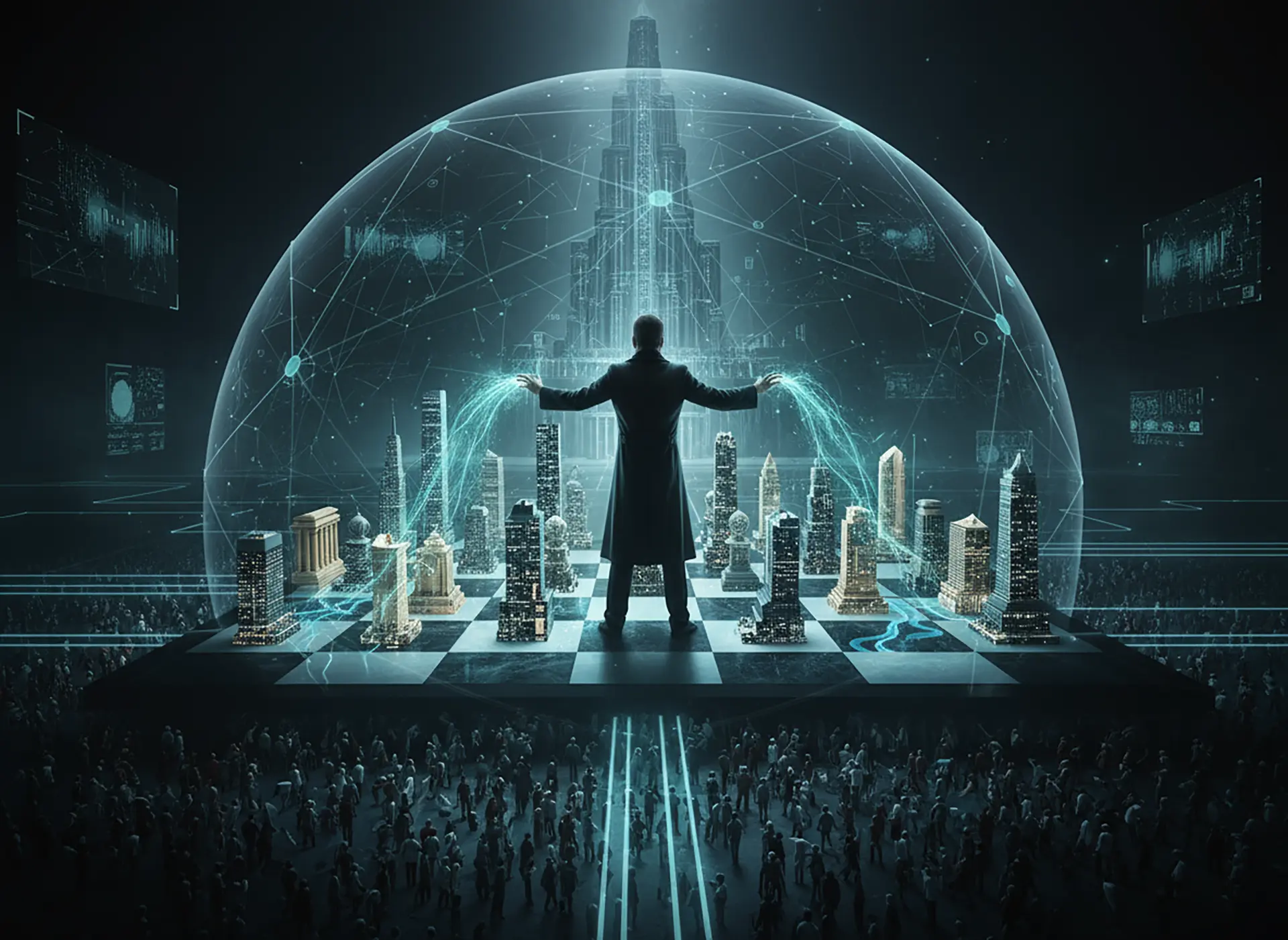
In a sense, yes — power has always been a narrative first, and a physical force second.
That’s the hidden architecture behind every empire, institution, and even modern algorithmic system.
Here’s how it unfolds through time:
⚙️ 1. Pre-industrial power: Myth as control
Early societies used stories, symbols, and rituals to establish who held divine favour.
Pharaohs, kings, priests — all claimed power through cosmic narrative before enforcing it with armies.
The myth made obedience natural — people didn’t see power; they believed it.
“He who controls the story controls the reality.”
🏛️ 2. Industrial power: Ownership as narrative
The industrial age translated myth into law, currency, and property.
Power became the story of progress — “we extract, we build, we grow.”
Money itself is narrative: a symbol backed by trust, not substance.
Institutions — banks, governments, corporations — maintained power through belief in the system’s stability.
🧠 3. Digital power: Data as narrative
In the 21st century, power moved from oil to information.
Platforms don’t just control data — they shape what people perceive as true.
Algorithms write new myths every day: trending topics, outrage cycles, influencer hierarchies.
The new kings are narrative engineers, not warriors.
🌍 4. Energetic / Conscious power: The next layer
At the deepest level, power exists where attention, emotion, and meaning converge.
Whoever sets the frame — moral, emotional, or symbolic — governs the field.
Earth 1.0 used narrative to extract energy (belief, labour, money).
Earth 2.0 uses narrative to circulate energy — truth, creativity, coherence.
🔄 So yes — power has always been a story
But in Earth 2.0 terms, you could say:
Inversion = when narrative is used to drain energy.
Regeneration = when narrative is used to amplify awareness.
The shift happening now — AI, media, politics, even personal identity — is a war of narrative fields.
The one that sustains coherence will eventually replace the one that demands control.