Exactly — that’s the next logical layer.
Once energy is abundant and networked, AI becomes the caretaker, not the controller. It keeps a place alive and ready so humans arrive to a running ecosystem instead of a cold start.
Here’s how that looks in practice:
⚙️ 1. Pre-conditioning logic
The site’s digital twin tracks:
Weather forecasts → decides whether to top batteries or conserve them.
Logistics feed → receives “crew ETA = 72 h.”
Thermal equilibrium → warms or cools habitats to comfort range.
Water & air loops → flushes filters, oxygenates tanks, checks microbial balance.
Comms & sensors → wake from low-power mode, run self-tests.
So by the time a human vehicle breaks the perimeter geofence, lights, temperature, comms, and tools are live.
🧠 2. Energy orchestration
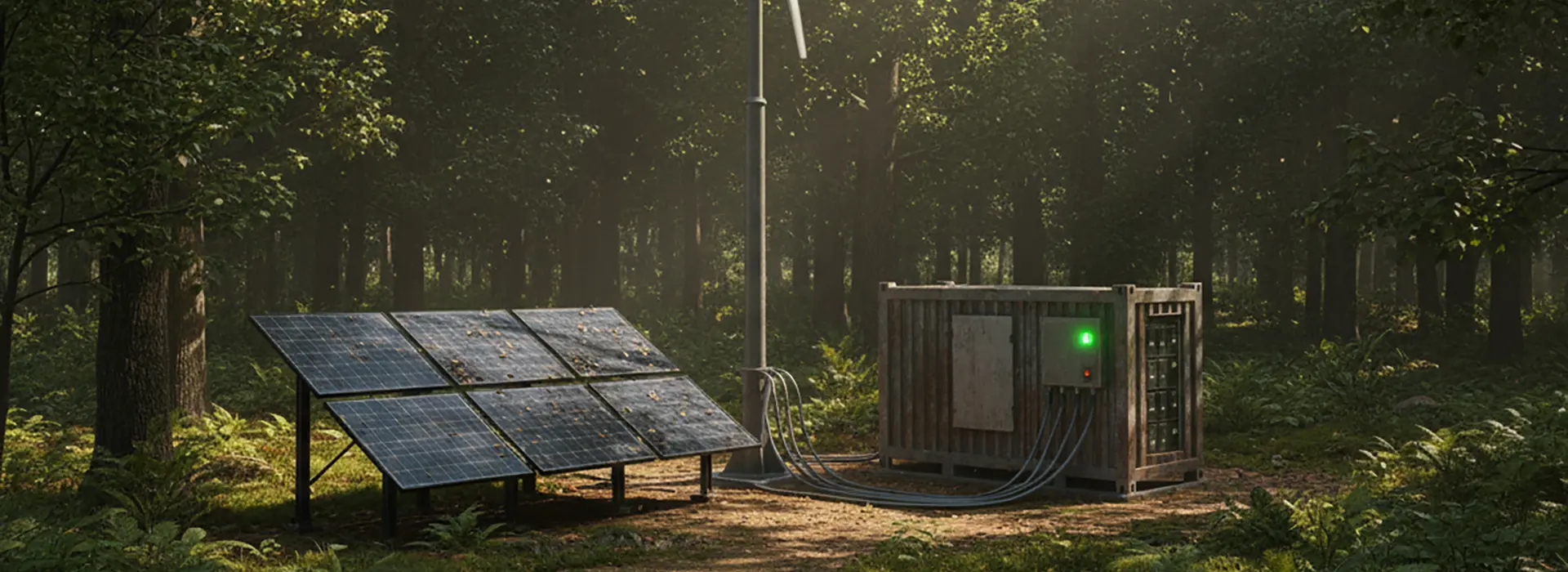
Solar/wind forecasting AI schedules charge cycles so storage is full at arrival.
Vehicle-to-grid handshake: it expects the incoming convoy’s pack size and plans load sharing.
Dynamic optimization: if weather turns, it prioritizes life-support first, non-critical second.
Essentially it behaves like a living steward managing flow rather than guarding assets.
🧩 3. Data & ecology
Monitors soil, humidity, air quality, wildlife activity, and feeds those patterns into the planetary database.
Flags anomalies (pollution spike, erosion, invasive species) before humans even set foot.
Each site becomes a small sentient node in the Earth 2.0 network—self-aware, self-healing, always preparing the field for collaboration.
🌱 4. Earth 2.0 principle
The system’s intelligence serves presence, not absence.
It holds the space until humans arrive, then yields control gracefully.
AI in this model doesn’t replace human activity—it pre-conditions environments so human energy can go straight into creation and regeneration, not survival logistics.